Reframing a Creator Pitch Deck Using Duarte’s Storytelling Method
Project
Investor / Brand Partnership Pitch Deck
Framework
Nancy Duarte’s Resonate + Slide:ology
Role
Story Architect & Presentation Strategist
Every effective presentation is a story of change.
Inspired by Nancy Duarte’s Resonate framework, this deck is structured to move the audience from the current reality to a new, more desirable future.
Instead of leading with scale or credentials, the story first establishes the problem and what’s at stake, introduces a critical insight, and then delivers a turning point that reshapes belief.
Each slide is designed to answer the audience’s unspoken question:
“Why does this matter to me?” and guide them, subtly but deliberately, toward action.
1.Baseline Reality — Understanding the Audience Context
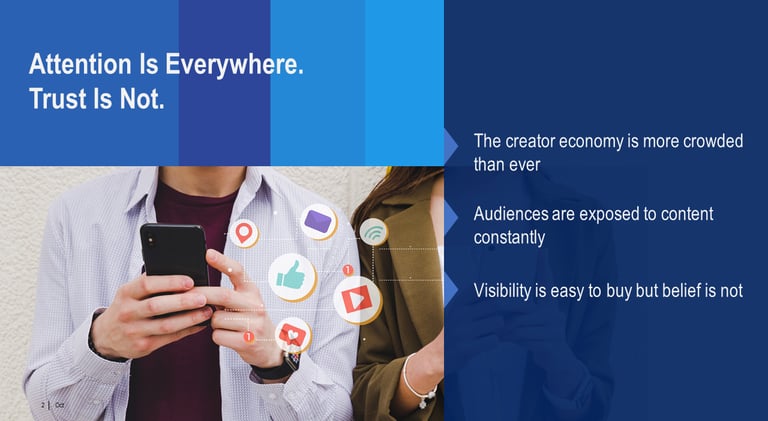
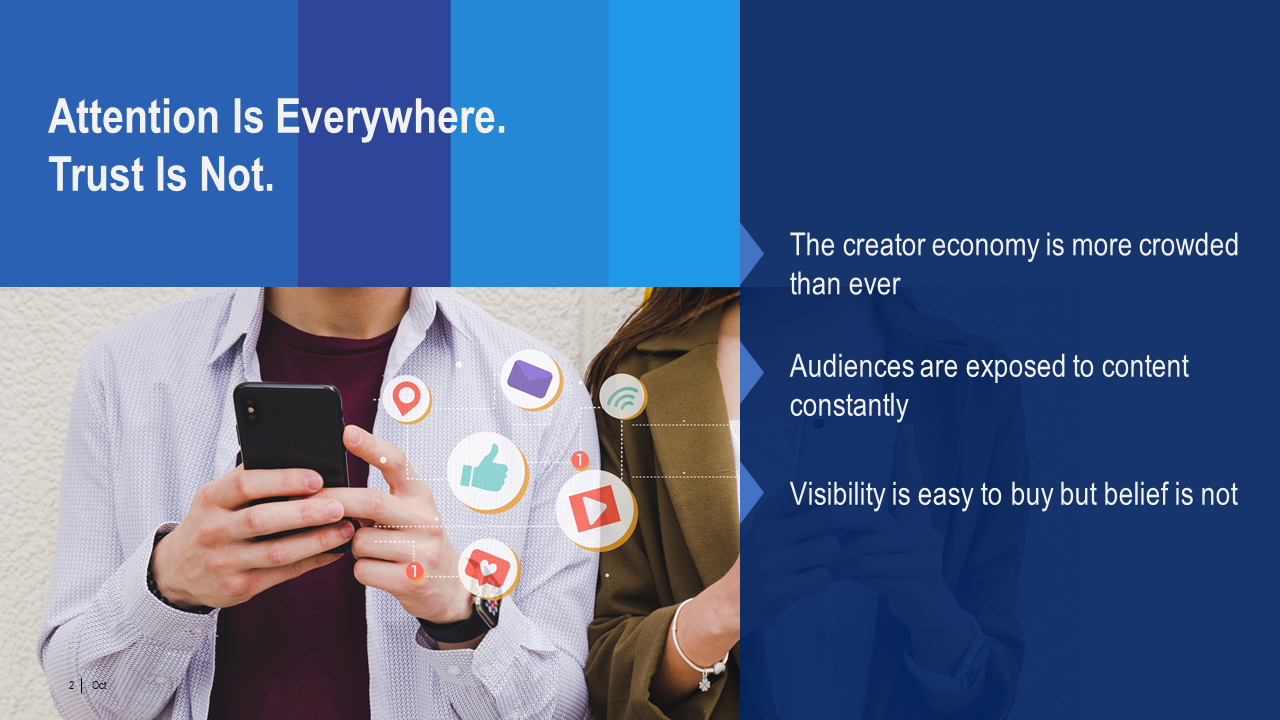
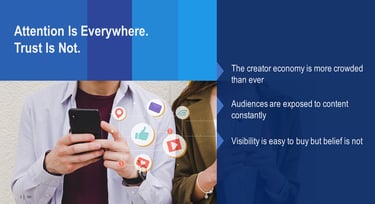
The story begins by establishing the baseline reality of the creator economy.
At this stage, the goal is not persuasion, but shared understanding.
By framing the landscape as one where attention is abundant but trust is scarce, the deck aligns with what the audience already knows. This creates cognitive agreement and reduces resistance before introducing any brand-specific claims.
Duarte principle applied: Meet the audience where they are before asking them to change.
2. Problem & Stakes — Deriving the Core Tension
Once the baseline is established, the narrative moves into the problem space.
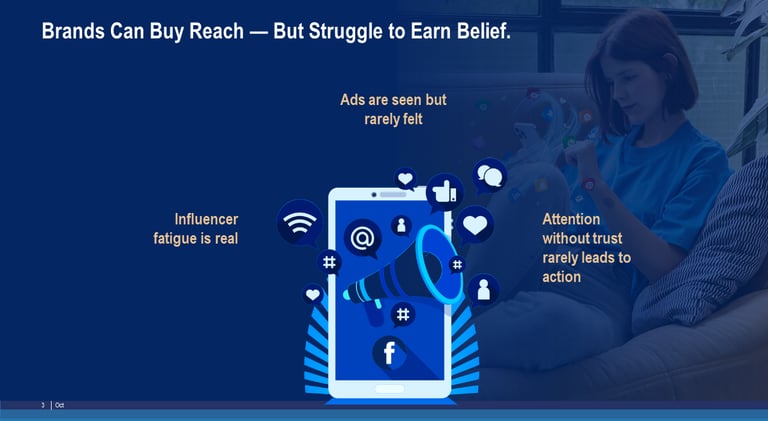
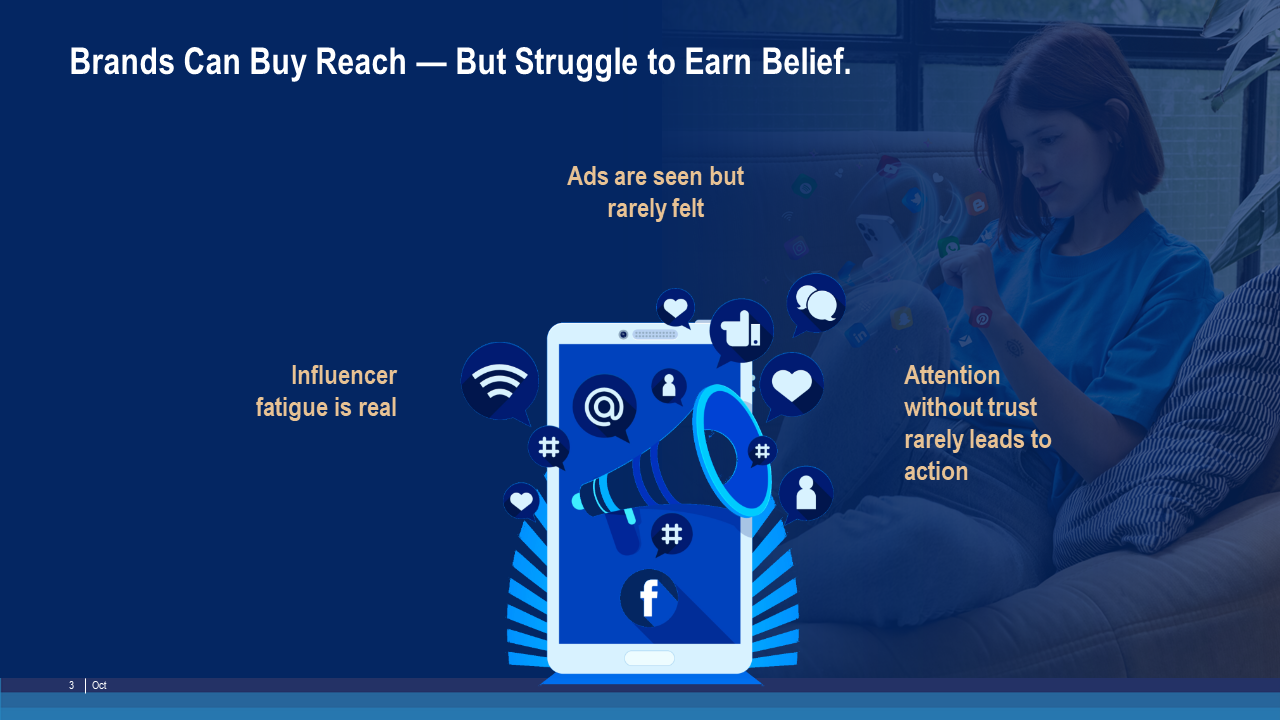
Here, the audience’s pain is articulated from their point of view — brands can buy reach, but struggle to
earn belief.
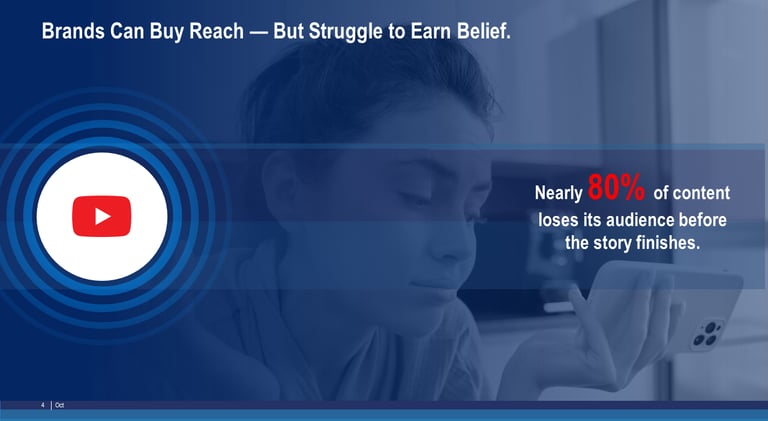
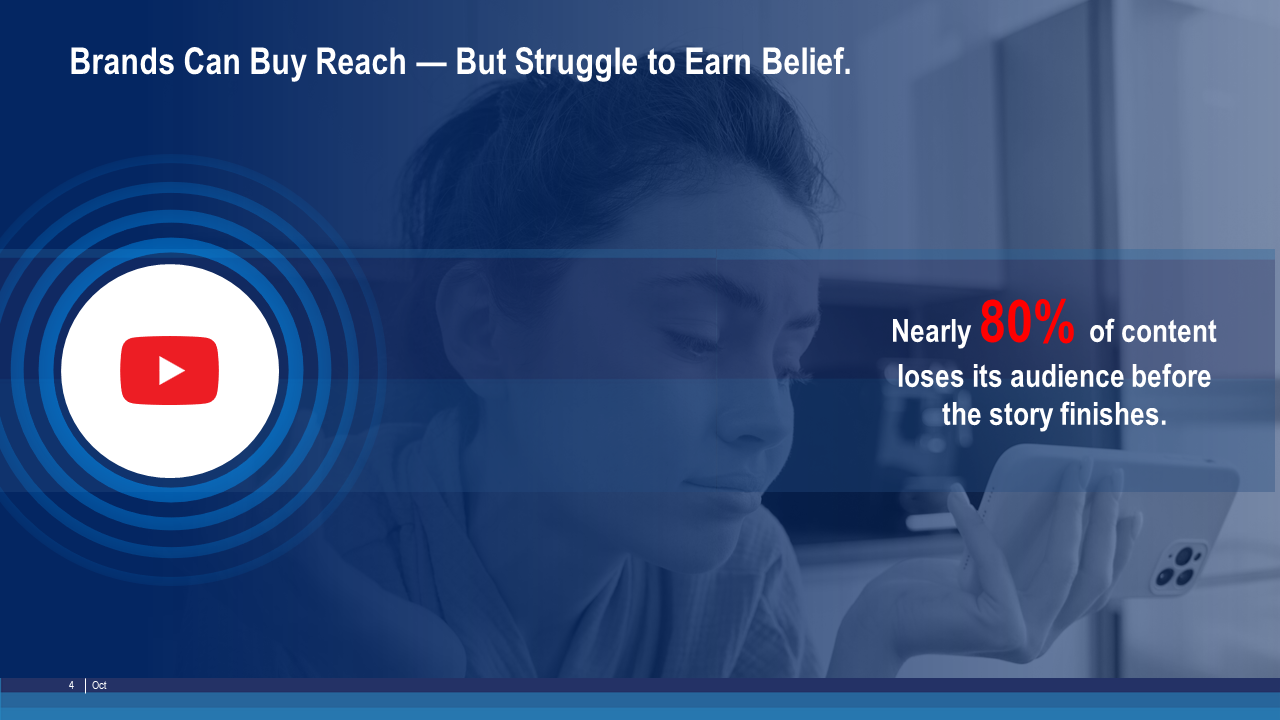
The completion-rate data (About 80% not finishing content) is introduced here to make the problem tangible. This transforms an abstract challenge into a measurable risk, clarifying what’s at stake if nothing changes.
Duarte principle applied: Make the cost of the current state uncomfortable enough to warrant change


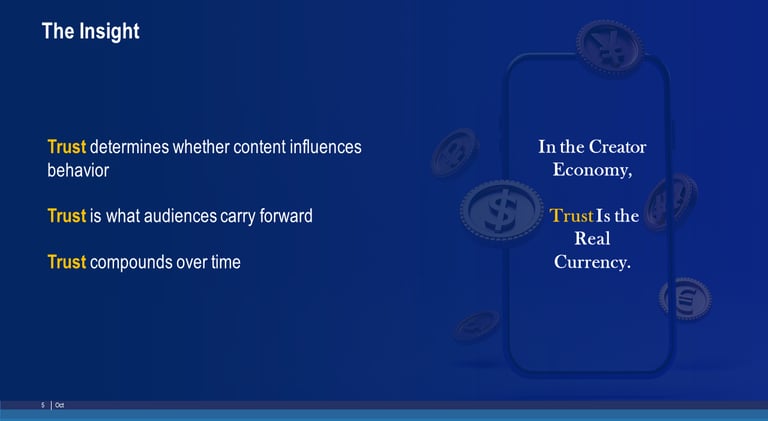
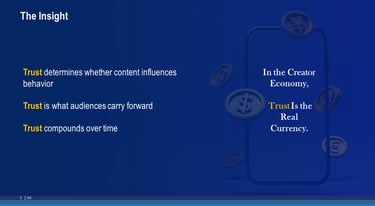
3. Insight — Reframing the Problem
With tension established, the deck introduces a reframing insight.
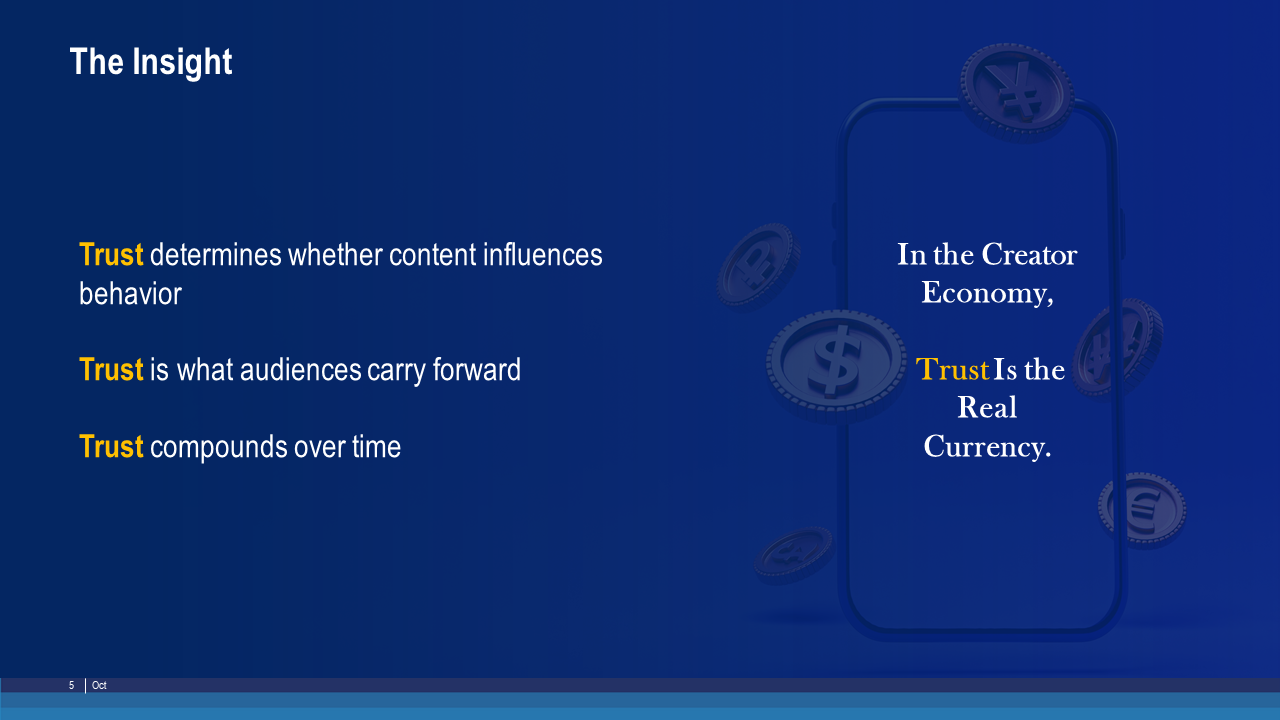
Rather than optimizing for views or impressions, the audience is invited to see trust as the true driver of influence.
This slide acts as a mental pivot — shifting the evaluation criteria from scale to belief. No proof is shown yet; the purpose is to change how the audience thinks, not convince them.
Duarte principle applied: Insight precedes evidence.
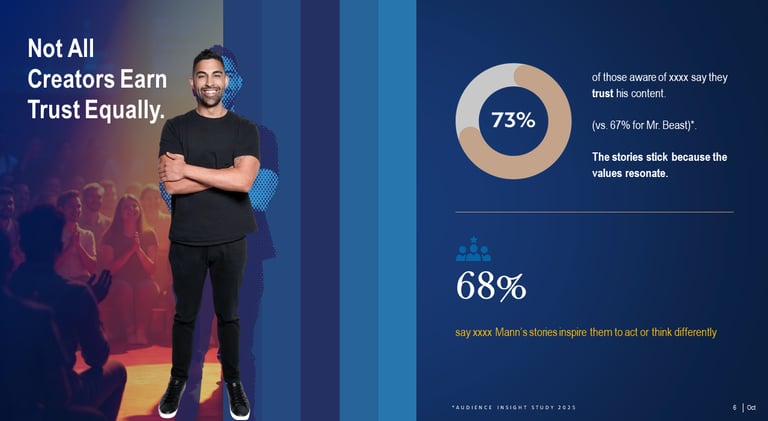
4. Turning Point — Validating the Reframe
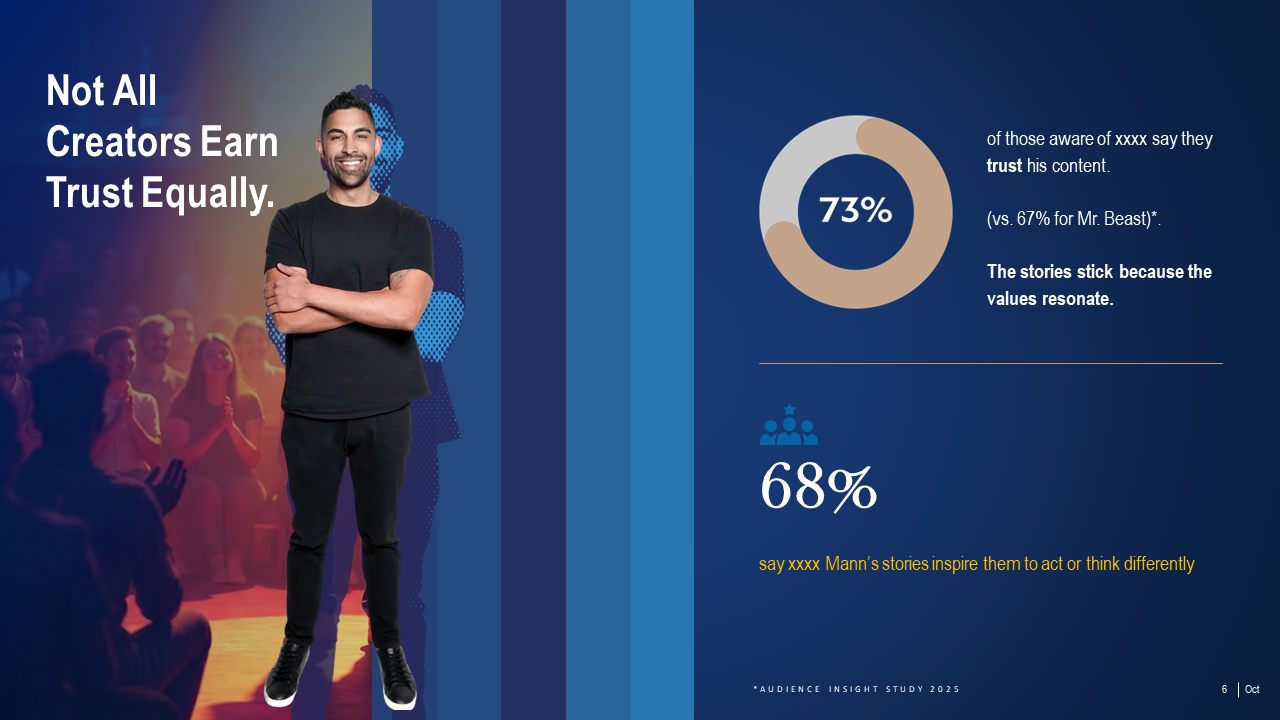
The turning point is where belief begins to shift.
Comparative trust data is introduced to validate the insight that trust is unevenly distributed across creators.
By showing that not all creators earn trust equally, the deck moves trust from an abstract concept to a defensible advantage. This is the moment where the audience mentally crosses from skepticism to curiosity.
Duarte principle applied: Contrast creates meaning.

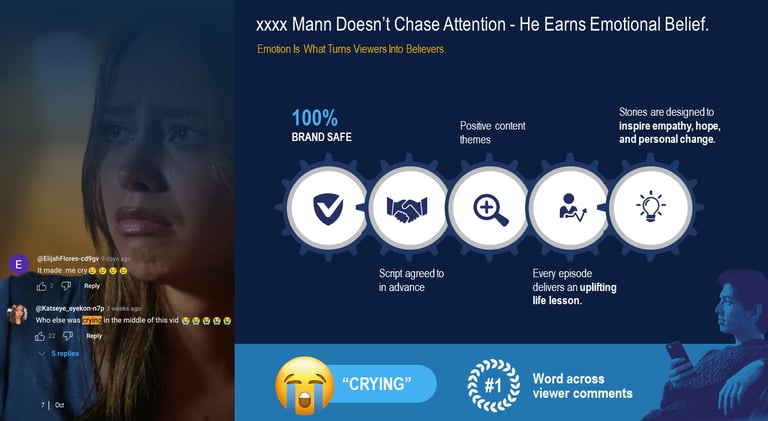
5. New Possibility — Defining the Desired Future
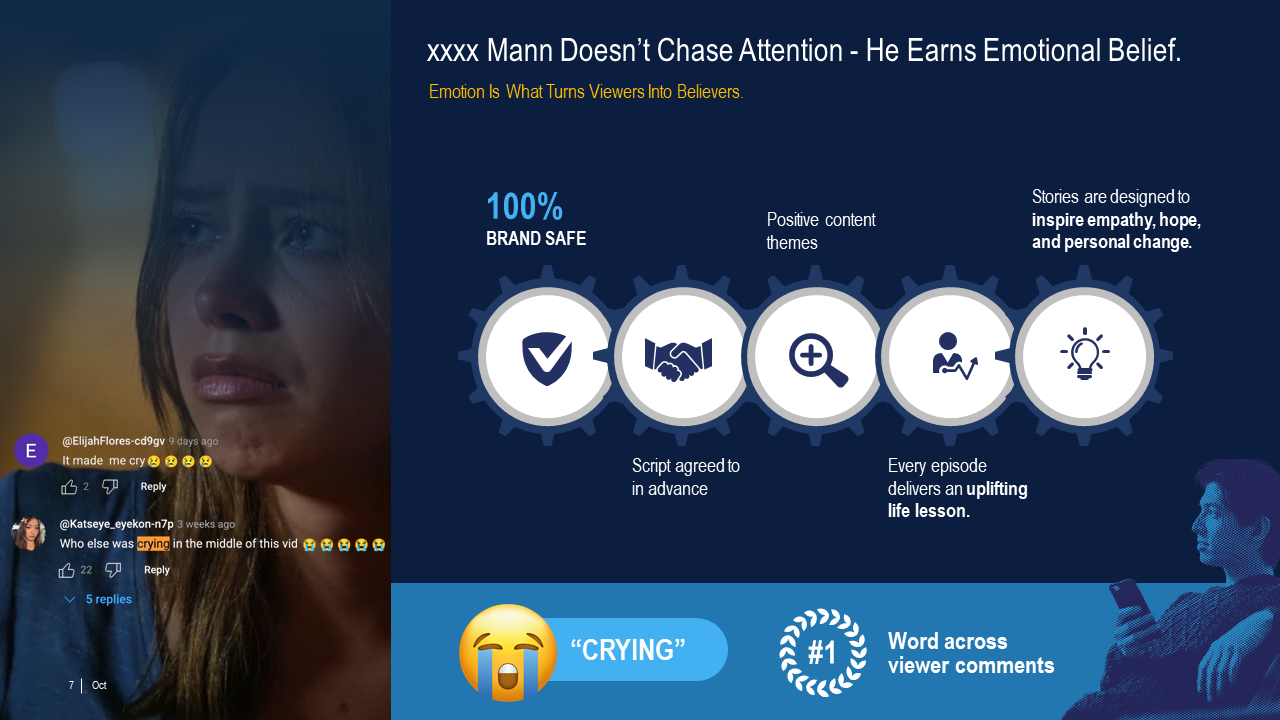
After the belief shift, the narrative explores the new possibility.
Emotional storytelling is positioned as a strategic mechanism that drives memory, credibility, and behavioral change — not as a creative preference.
These slides describe what becomes possible once trust is treated as a core asset rather than a byproduct.
Duarte principle applied: Show the reward of adopting the new belief.

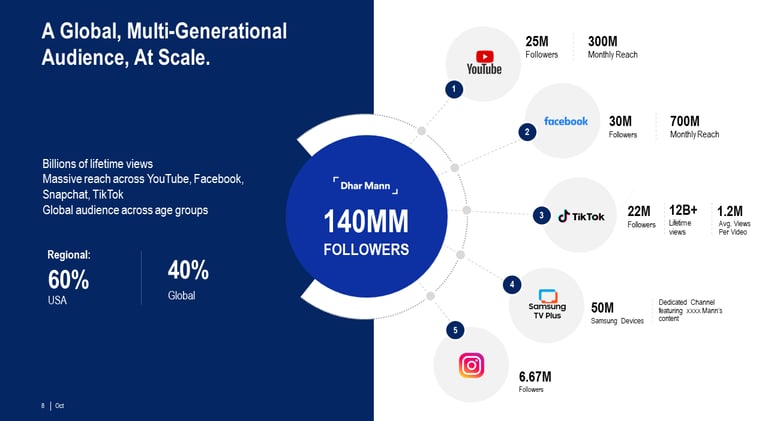
6. Supporting Evidence — Reducing Risk
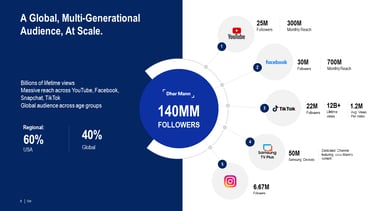
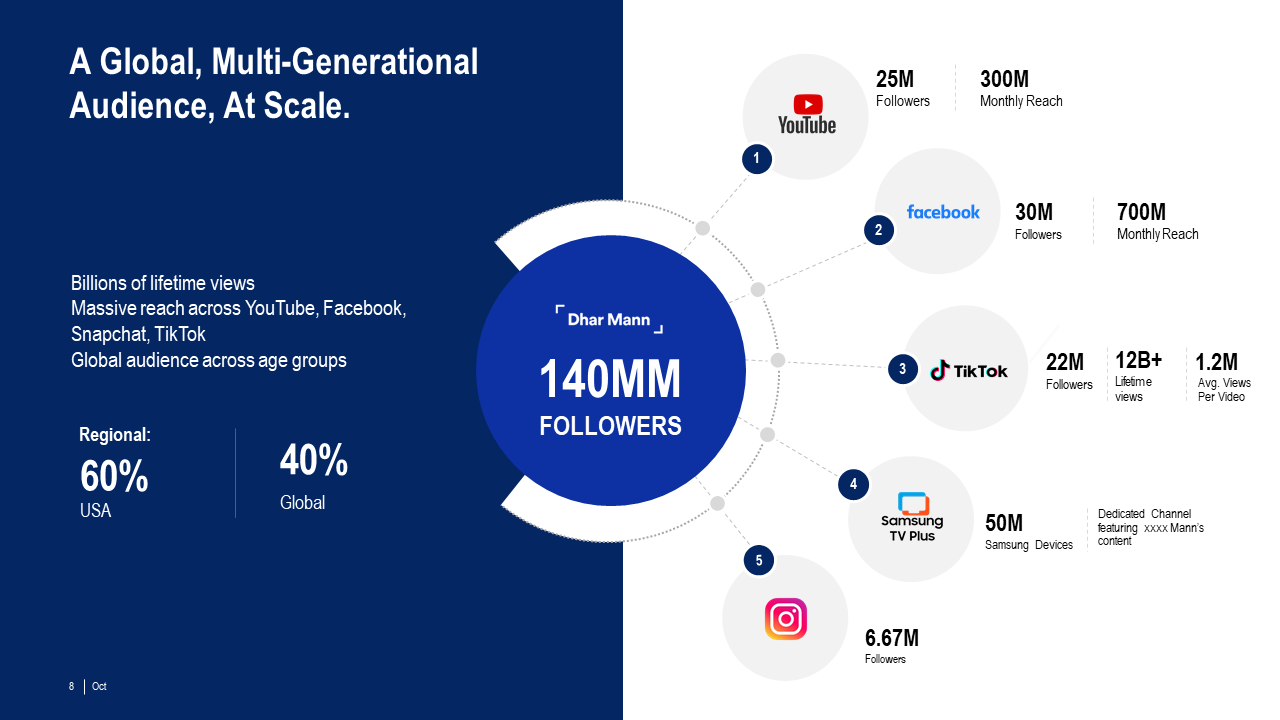
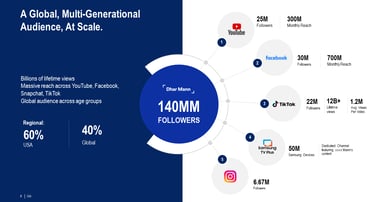
Supporting metrics around audience inspiration, behavior change, and scale reinforce the new belief. These slides are intentionally placed after the turning point to avoid overwhelming the audience before they are ready to accept the data.
The role of these slides is reassurance, not persuasion.
Duarte principle applied: Proof supports belief — it doesn’t create it.
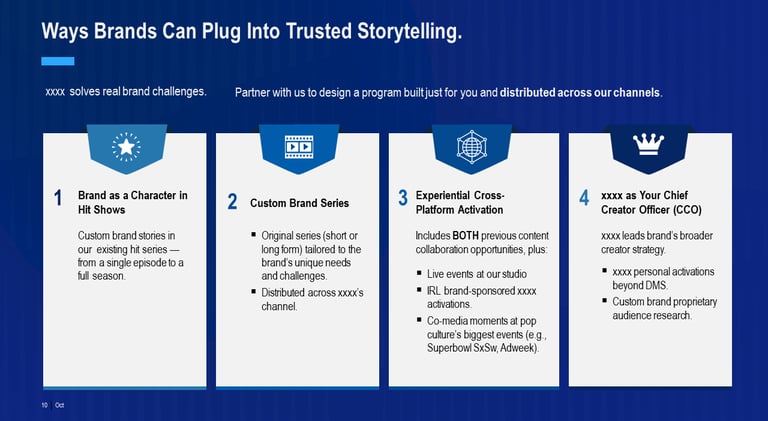
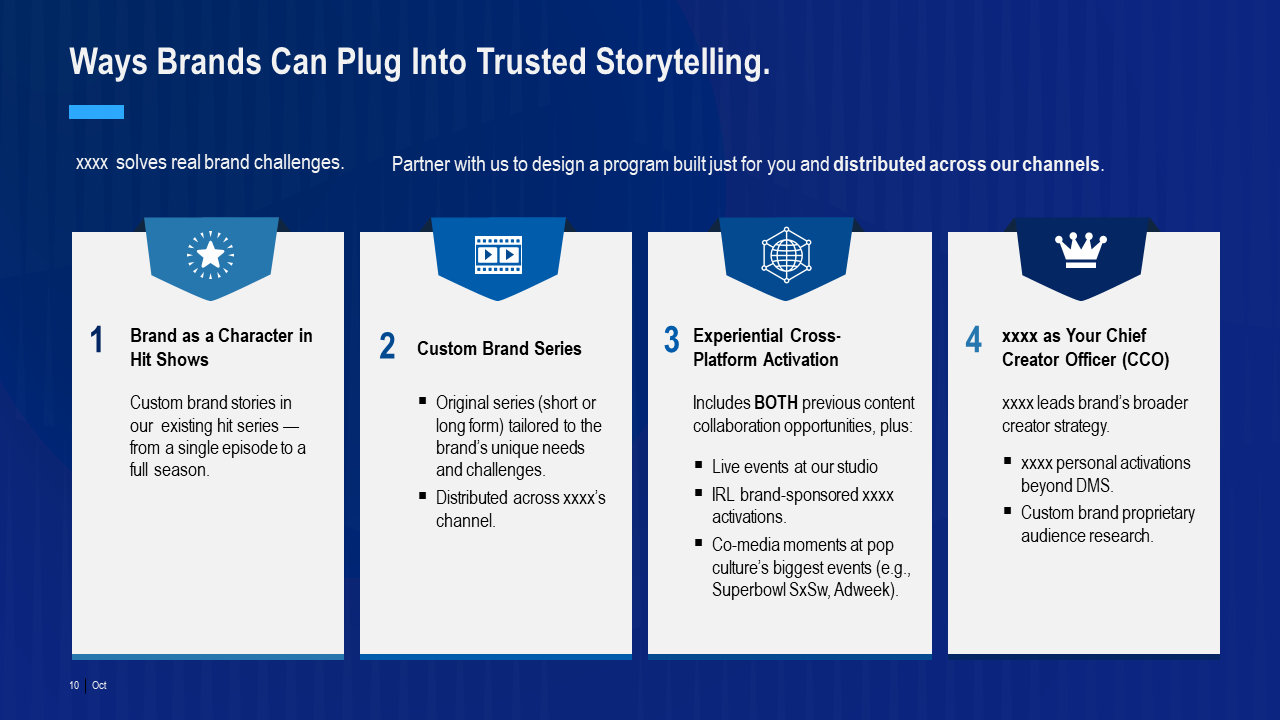
7. Action — Providing Clear Opportunities
At this stage, the deck shifts from persuasion to enablement.
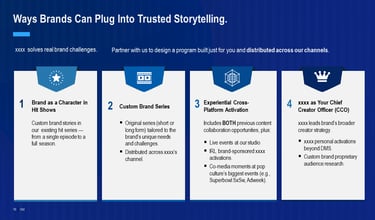
With belief established and risk reduced, the narrative presents concrete opportunities for brands to participate in trusted storytelling
Duarte principle applied: When audiences see opportunity, action feels like their idea.


The Process (in short)
Baseline Reality
(Creators are everywhere. Attention is expensive.)Problem
(Brands struggle to earn emotional trust.)Insight
(Trust is rarer than reach.)Turning Point ⭐
(xxx Mann outperforms even top creators in trust.)New Possibility
(Brands can borrow this trust.)Action
(Here’s how to collaborate.)
A. What kind of deck is this?
Pitch = skeptical audience
Strategy = confused audience
Investor = risk-aware audience
Collaboration deck = evaluating audience
Brand deck = curious audience
B. What does the deck want the audience to do?
If it wants to convince → audience is unsure
If it wants to inspire → audience is low-energy
If it wants to align → audience is misaligned
Understand WHO the story is for, and create the Big Idea that drives the entire presentation.
The Big Idea formula:
A point of view + a reason to care + a strategic outcome
Every case study will begin with:
“Big Idea: …”
“Audience:” …
“Problem we solved:” …
Build tension → release → transformation in every deck.




Output